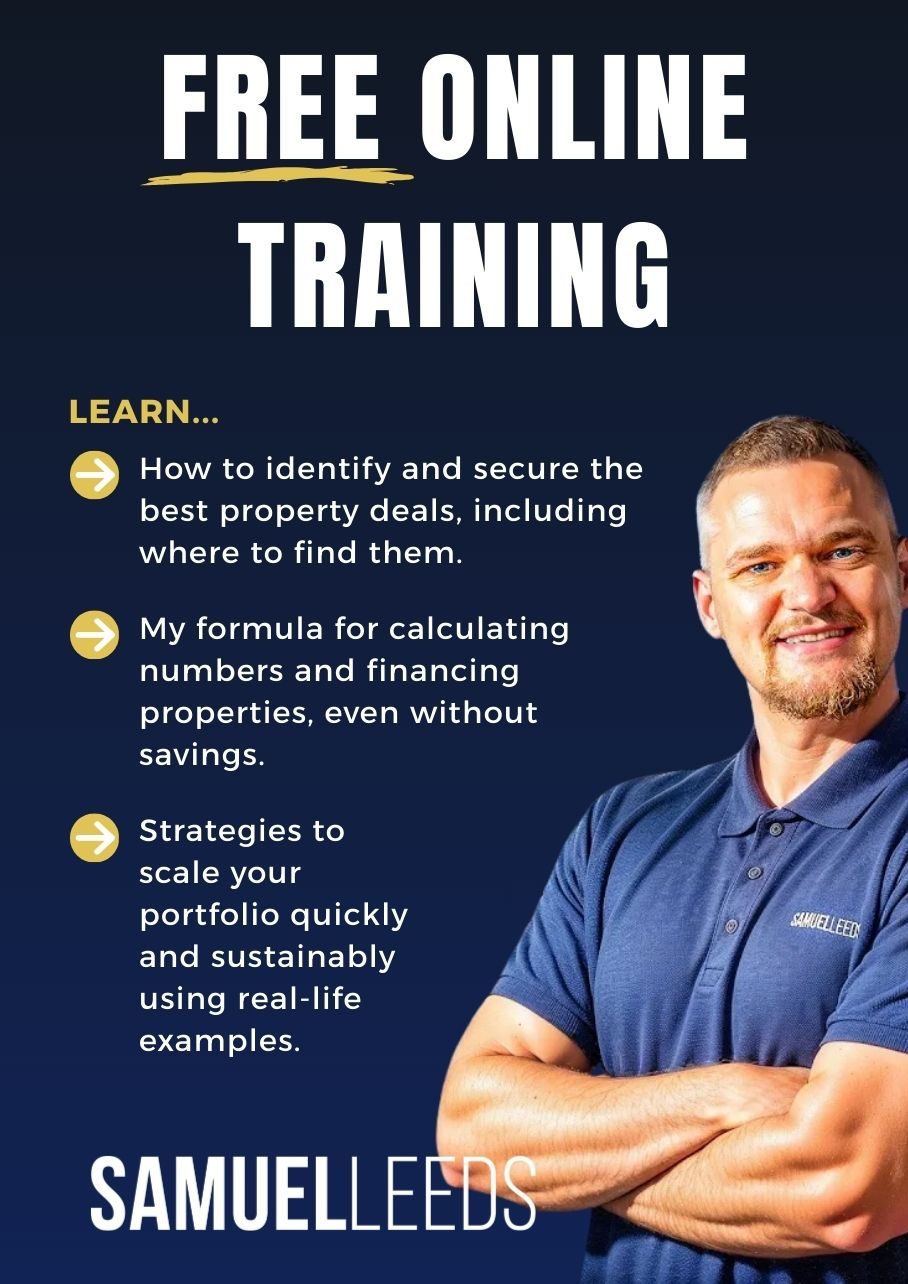
In 2020, my net worth was independently valued at £20 million. Since then, I have generated over £100 million in revenue across my businesses, secured a hotel on a lease option that produces more than £500,000 a year, taken a 49% stake in a property technology company now valued at £10 million, and banked £500,000 profit from a residential development in Lincoln.
None of that came from selling courses.
This is the piece I have wanted to write for a long time, because the misunderstanding about how my business works is widespread, and it matters.
The Academy Is Not the Business. It Is the Door Into the Business.
I founded the Samuel Leeds Academy to educate people about property investing. It is one of the most recognised platforms of its kind in the United Kingdom, with thousands of people passing through it every year.
I keep the net profit margin at around 5%. Deliberately.
Not because the academy cannot generate more. It could. If I raised prices, cut support staff and optimised for short-term extraction, I could run a far more profitable education business. Many people do exactly that.
But that is not what I am building.
The academy exists to do three things: educate, build trust, and identify serious people. The third function is the one that drives everything else. Property at scale is a relationship business. The deals that genuinely move the needle, the joint ventures, the equity structures, the large-scale developments, do not happen with strangers. They happen with people you have watched show up consistently, take action under pressure, and prove over time that they are worth backing.
The academy is how I find those people at scale. Keeping margins low allows me to overdeliver, which builds the quality of trust required to do significant transactions together. The real upside is not in the front end. It is in everything that comes after.
What the Model Produces in Practice
Three examples from the last few years demonstrate this more clearly than any theory.
DealSourcr. An academy member developed an AI-powered platform that scrapes the internet for off-market property opportunities. I recognised what they were building, backed the project from the outset, and took a 49% shareholding. The company is now valued at £10 million. That return did not come from a course fee. It came from a relationship that started inside the academy ecosystem.
Willingham House. An academy member sourced a hotel opportunity and brought it to me, earning a £25,000 finder's fee for doing so. I secured the property on a lease option for £1, with an option to purchase at £2.1 million in ten years' time. The hotel now generates over £500,000 a year in revenue. One relationship, properly structured, created value for both sides.
St Anne's Road, Lincoln. An academy member identified a land opportunity and brought it to me. I provided the funding, we developed six houses together, and the project generated £500,000 in profit. A straightforward joint venture between two people who already trusted each other.
These are not isolated cases. They are what happens when you build an ecosystem rather than a transaction.
The Independent Evidence
Sceptics will say these are cherry-picked stories. So in 2025 I commissioned Survation, the polling firm trusted by the BBC, The Telegraph and Sky News, to survey the academy's membership independently. The results were published in full.
86% of members who joined since 2020 secured a property deal within their first year. 95% said they would recommend the academy to a friend. 92% said the mentoring and live training gave them the confidence to act.
For context, Survation noted that only around 16% of law graduates go on to earn money as lawyers, after years of study and significant debt.
The Samuel Leeds Academy is not a guarantee. Nothing in investing is. But an 86% deal completion rate in the first year, verified by an independent polling company, is not something that happens by accident. It happens because the model is built around execution, not consumption.
This Is Not a New Playbook
The most successful operators in the world share their knowledge publicly. Warren Buffett publishes his letters. Naval Ravikant gives his frameworks away for free. Richard Branson has written multiple books. None of them do it for the publishing advance.
They do it because putting your thinking into the world attracts the right people: investors, operators, partners, collaborators. The content is the filter. The relationships it creates are the asset.
My model applies the same logic to property. The Samuel Leeds Academy is the filter. The deals, the equity stakes, the development partnerships and the lending returns are the business.
What I Actually Measure
I do not measure the performance of my business by how much the academy turns over. I measure it by deals completed, profits generated, and partnerships formed with people who are genuinely building something.
A net worth valued at £20 million in 2020, followed by over £100 million in revenue and a portfolio of assets that continues to grow, was not built on course sales. It was built on knowing how to structure deals, who to do them with, and how to build the kind of trust that makes serious people want to bring you their best opportunities.
The academy is the ecosystem. The deals are the output.
I am not building an education business. I am building a deal business, and the education is how the right people get access to that world.
About Samuel Leeds
Samuel Leeds is a British property investor, entrepreneur and founder of the Samuel Leeds Academy. With a net worth valued at £20 million in 2020 and over £100 million generated in subsequent revenue across his businesses, he has built a portfolio spanning residential development, commercial property, asset-backed lending and equity stakes in property technology. He is based in the United Kingdom